 Hollywood Feed

Table of Contents
- Why Standard Air Fresheners Pose Risks to Cats
- Air Fresheners Toxic to Cats: What to Avoid
- Essential Oils Toxic to Cats: Why Diffusers Are Dangerous
- Cat-Safe Odor Eliminators: What Actually Works
- Litter Box Odor Control: Tackling the Source
- How to Evaluate Product Labels and Safety Claims
- Signs Your Cat Has Been Exposed to Harmful Air Fresheners
- Frequently Asked Questions
Last Updated: October 10, 2026
Why Standard Air Fresheners Pose Risks to Cats
Common air fresheners can harm cats because they have sensitive respiratory systems and metabolize chemicals differently than humans. Cats spend most of their time indoors, where they're repeatedly exposed to compounds designed to mask odors, not neutralize them.
Regular exposure to artificial fragrances, essential oils, and chemical propellants can irritate cats' airways, skin, and eyes over time, causing coughing, sneezing, or watery eyes.
Pet owners often choose air fresheners to create a welcoming home, not realizing that safe air fresheners for cats are essential to avoid compromising their health. Understanding which products pose risks and which alternatives work is essential.
Air Fresheners Toxic to Cats: What to Avoid
Air freshener risks vary by exposure route, concentration, and duration of use. Understanding these differences helps you make safer choices.
Aerosol sprays: Inhalation and ingestion risk
Aerosol sprays deliver fragrance particles directly into the air. Your cat inhales the mist and particles settle on their fur; during grooming, they ingest whatever lands on their coat, creating dual exposure.
Exposure route: Inhalation (primary) + ingestion (secondary through grooming)
Risk level: Moderate to high with repeated use
Precautions: Spray only when your cat is in another room with a closed door. Ventilate the sprayed area for at least 15 minutes before allowing your cat back. Avoid spraying near litter boxes, food bowls, or sleeping areas. Never spray directly on your cat or their belongings.
Why it's problematic: Propellants irritate airways. Synthetic fragrances contain phthalates that cats metabolize poorly, and even "natural" sprays contain concentrated plant oils that accumulate in their system.
Plug-in diffusers: Continuous, low-level exposure
Plug-in air fresheners release fragrance continuously, maintaining steady chemical vapor in the room for hours or days, unlike sprays which deliver a burst.
Exposure route: Inhalation (continuous)
Risk level: Moderate, but severity increases with room size and ventilation
Precautions: Never use plug-ins in small, poorly ventilated rooms (bedrooms, bathrooms, closets). If you use one, keep it in a room your cat can leave freely. Ensure windows or vents provide air exchange. Replace cartridges on schedule, overused cartridges release higher concentrations.
Why it's problematic: Continuous exposure allows volatile compounds to accumulate in the respiratory tract, causing chronic irritation. Cats with asthma or respiratory conditions face higher risk of flare-ups.
Scented candles: Soot, heat, and airborne particles
Scented candles release fragrance particles and soot into the air, with heat creating currents that distribute particles throughout the room.
Exposure route: Inhalation (particles and soot)
Risk level: Low to moderate, depending on candle size and room ventilation
Precautions: Use only in well-ventilated rooms. Never leave a candle burning unattended in a room where your cat spends time. Keep candles out of reach, curious cats may knock them over or try to bat at the flame. Extinguish candles when you leave the room. Avoid scented candles in bedrooms or small enclosed spaces.
Why it's problematic: Soot irritates cats' noses and respiratory tracts. Cats often avoid rooms with burning candles, signaling discomfort. Compounds like benzene and toluene released during burning are respiratory irritants.
Essential oil diffusers: High concentration and toxicity
Essential oil diffusers disperse highly concentrated plant oils that cats cannot safely metabolize, unlike diluted fragrance products.
Exposure route: Inhalation (primary) + absorption through skin and paw pads
Risk level: High
Precautions: Do not use essential oil diffusers in homes with cats. This is not a "use with caution" scenario, it is a "do not use" category. If you have used one, discontinue immediately and ventilate thoroughly.
Why it's problematic: Cats lack glucuronidation, a liver enzyme that breaks down certain compounds (Feline drug metabolism and disposition). Essential oils accumulate in their bodies and cause poisoning with symptoms including drooling, tremors, vomiting, difficulty breathing, and loss of coordination. "Pet-safe" claims are unregulated and do not guarantee safety.
Wax melts and reed diffusers: Passive but persistent
Wax melts release fragrance as wax softens from heat. Reed diffusers use absorbent sticks to passively evaporate fragrance oil over weeks.
Exposure route: Inhalation (continuous, low-level)
Risk level: Low to moderate
Precautions: Keep wax warmers out of reach and away from areas where your cat rests. Reed diffusers should be placed in rooms your cat can leave freely. Do not use in small, enclosed spaces. Check product labels for essential oils, many wax melts and reed diffusers contain them.
Why it's problematic: These products release fragrance continuously, and cats in small rooms face cumulative exposure. Many contain essential oils, which elevates risk significantly.
Odor-absorbing products: Generally safer
Activated charcoal, baking soda, and enzymatic products absorb or break down odor molecules rather than masking them with fragrance.
Exposure route: Minimal to none (passive systems)
Risk level: Very low
Precautions: Ensure products are truly fragrance-free by checking labels. Some charcoal products are infused with fragrance, which defeats the purpose. Enzymatic products are safe but should be kept out of reach if they contain ingredients your cat might ingest in large quantities.
Why they're safer: They address odor at the source rather than masking it, making them the preferred choice for cat households.
Essential Oils Toxic to Cats: Why Diffusers Are Dangerous
Citrus, eucalyptus, peppermint, lavender, and tea tree oils are toxic to cats. Cats lack glucuronidation, a liver enzyme that breaks down these compounds, so essential oils accumulate and cause poisoning with symptoms including drooling, tremors, vomiting, difficulty breathing, and loss of coordination. Diffusers can run unattended for hours, causing significant exposure before symptoms appear. Never use diffusers in homes with cats.
Cat-Safe Odor Eliminators: What Actually Works
Odor control fails when pet owners mask smells instead of removing them. The most effective approach addresses the odor source first, improves ventilation, then uses fragrance-free neutralizers as a supplement.
Step 1: Remove the odor source
Litter box odor comes from waste decomposition releasing ammonia and other volatile compounds. No air freshener can overcome a neglected litter box.
Daily scooping: Remove clumped litter and solid waste at least once daily (twice daily in multi-cat households). Each day of delay allows more odor-causing compounds to accumulate.
Litter choice: Use unscented, clumping litter, which seals waste and prevents odor release more effectively. Scented litters add fragrance chemicals your cat inhales and ingests.
Enzymatic litter additives: Products containing natural enzymes (such as protease) break down the organic compounds that cause odor.
Litter box maintenance: Replace litter completely every 1-2 weeks and wash the box with unscented soap and water.
Step 2: Improve ventilation and air circulation
Once the source is controlled, ventilation prevents odor from concentrating. Open windows for at least 15 minutes daily. Run exhaust fans during and after litter box use, or use a portable HEPA air purifier (not an ionizer).
Litter box placement: Position the litter box away from bedrooms and living areas, near a window or door with natural air movement. Avoid small, enclosed spaces. Use a ceiling or portable fan to keep air moving and prevent odor concentration.
Step 3: Use fragrance-free odor neutralizers
After controlling the source and improving ventilation, safe air fresheners for cats, fragrance-free neutralizers, provide additional protection by absorbing or breaking down odor molecules.
Activated charcoal systems: Charcoal filters placed near the litter area capture airborne odors passively, require no electricity, and pose no risk to cats. Effectiveness lasts 2-4 weeks.
Enzymatic odor neutralizers: Products containing enzymes break down odor-causing compounds on surfaces and in the air.
Baking soda: Sprinkle unscented baking soda directly into the litter box (a light layer under the litter and on top after scooping).
Passive air-neutralizing systems: Products using activated charcoal or mineral-based absorbers neutralize airborne odors without fragrance or electricity.
Why this hierarchy works
This approach prevents odor from becoming a problem. Daily scooping, unscented litter, and ventilation keep odor levels low; fragrance-free neutralizers handle residual odors without exposing your cat to harmful chemicals.
Multi-cat households: Combine daily scooping (twice daily if possible), enzymatic litter additives, and fragrance-free neutralizers. Small spaces: Prioritize ventilation and enzymatic products; avoid fragrance-based products. Senior cats or cats with respiratory conditions: Use unscented litter, scoop twice daily, ensure excellent ventilation, and rely on charcoal filters or enzymatic products only.
Litter Box Odor Control: Tackling the Source
Litter box odor control starts with understanding where the smell originates. Urine and feces decompose and release ammonia and other compounds. These odors don't stay in the box, they spread throughout your home through the air. That's why masking products fail.
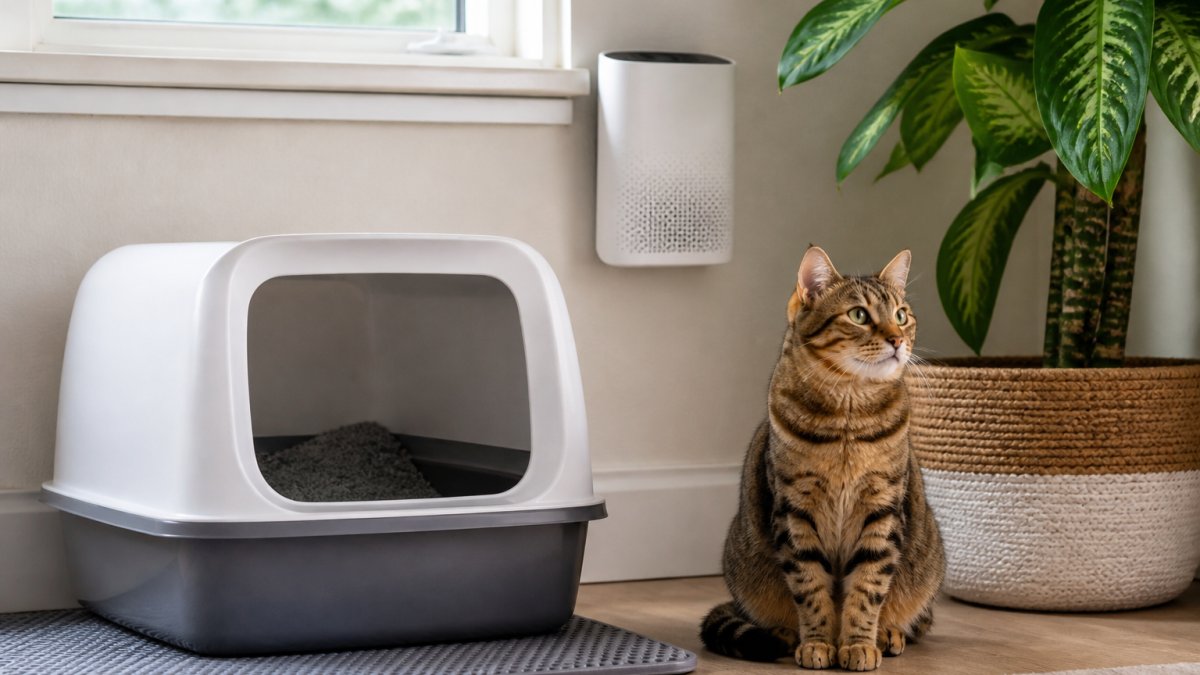
Effective litter box odor control involves three steps:
- Scoop waste daily to prevent buildup
- Use unscented litter in a box with good ventilation
- Add a fragrance-free odor neutralizer near the litter area
Regular scooping is non-negotiable. Even the best odor control system can't overcome a neglected litter box. Daily removal of clumped litter and solid waste dramatically reduces odor at the source.
Choosing the right litter matters too. Unscented clumping litter controls odors better than scented varieties because it seals waste and prevents odor release. Scented litters add fragrance chemicals on top of the litter, which your cat inhales and ingests while using the box.
How to Evaluate Product Labels and Safety Claims
When shopping for odor control products, read labels carefully. Terms like "pet-safe" and "natural" aren't regulated and don't guarantee safety.
Look for these key indicators:
- Fragrance-free or unscented: This means no added scents, not just "lightly scented"
- No essential oils: Check the ingredient list for oils like tea tree, eucalyptus, citrus, or peppermint
- No phthalates or synthetic fragrances: These chemicals are common in conventional air fresheners
- Third-party testing: Some products carry certifications from independent organizations
- Transparent ingredient list: Avoid products that list "fragrance" without specifying what that means
Be skeptical of vague language like "plant-based," "naturally derived," and "gentle formula." The safest products are designed specifically for pet households with cat safety in mind from the start.
Signs Your Cat Has Been Exposed to Harmful Air Fresheners
Cats exposed to toxic air fresheners may show respiratory signs first: coughing, wheezing, sneezing, nasal discharge, watery or red eyes, or difficulty breathing. Some show skin irritation or become withdrawn and hide to avoid the irritating environment.
Severe exposure to essential oils may cause excessive drooling, vomiting, or loss of coordination, signs of poisoning requiring immediate veterinary attention. Remove the product immediately and increase ventilation if symptoms appear.
Keeping your home fresh doesn't require sacrificing your cat's health. The solution is choosing products designed with cats in mind. MoodifyPet's fragrance-free odor neutralizer eliminates litter box smells before they spread, without any of the risks associated with conventional air fresheners.
Frequently Asked Questions
How can I make my house smell good without harming my cat?
Focus on odor elimination rather than masking. Remove the source by scooping litter daily, using unscented litter, and improving ventilation. Safe air fresheners for cats include fragrance-free, passive systems designed specifically for pet homes. Avoid sprays, plug-ins, scented candles, and essential oil diffusers, which release volatile compounds that irritate cats' sensitive respiratory systems. Natural methods like opening windows and enzymatic cleaners work well without chemical exposure.
What should I do if my cat is exposed to an air freshener?
Move your cat to fresh air immediately and open windows to ventilate the space. Watch for signs of respiratory irritation: coughing, wheezing, excessive drooling, or labored breathing. If your cat ingested a product or shows severe symptoms, contact your veterinarian or an emergency animal poison control center right away. Most mild exposures resolve quickly once the irritant is removed, but professional guidance is important if symptoms persist or worsen.
Are essential oil diffusers safe to use around cats?
No. Essential oils are toxic to cats because they contain volatile compounds that cats cannot metabolize effectively. Diffusers release these compounds into the air, where cats inhale them and absorb them through their skin and respiratory system. Common oils like eucalyptus, citrus, and lavender are particularly dangerous. Even diffusing for short periods or in separate rooms poses risk because airborne particles travel throughout your home. Cats are far more sensitive to these toxins than humans.
What's the actual difference between air fresheners that mask odors and cat-safe odor eliminators?
Masking air fresheners add fragrance to cover smells but don't address the source—your cat still breathes in litter box odors plus synthetic fragrances, increasing respiratory stress. Cat-safe odor eliminators neutralize odors at the source through passive systems that don't release fragrance or volatile compounds. They work by neutralizing airborne particles rather than layering new scents on top. This approach protects your cat's health while actually solving the odor problem instead of hiding it.