 Hollywood Feed



Table of Contents
- How to Create a Cross-Breeze With One Window
- Keeping Cats Safe Around Open Windows, Screens and Fans
- Cat Litter Box Odor Ventilation: A Room-by-Room Plan
- HVAC Pet Safety Tips for Ventilation
- Choosing an Air Purifier for Cat Litter Odor
- Booking Your Next Step: Set Up Your Ventilation Plan This Week
- Frequently Asked Questions
Last Updated: November 2, 2026
Cat owners know the smell that builds up when the air in a home stops moving, and learning how to ventilate a home with cats is one of the simplest ways to fix it. Litter box odors, pet dander and stale air can settle into carpets, curtains and furniture. Good ventilation moves that air out and brings fresh air in, which makes a home feel cleaner and more comfortable for both people and cats. Ventilation is one part of a bigger routine that also includes regular scooping, litter changes and cleaning.
Ventilation means exchanging indoor air with outdoor air. Air circulation is different. A ceiling fan can move air around a room without bringing any fresh air in, so the room may still feel stale. Good ventilation does both: it moves air and swaps it.
Here is what proper ventilation can do for a home with cats:
- Dilutes the odors that come from the litter area
- Helps reduce dust and pet dander in the air
- Gives you a fresher feeling without strong sprays or heavy scents
- Makes shared rooms more pleasant for guests
Ventilation does not remove every odor or allergen, and it does not replace scooping or cleaning, so treat it as part of a broader plan for how to ventilate a home with cats. Think of it as one tool that works best alongside the others.
How to Create a Cross-Breeze With One Window
A cross-breeze is the simplest way to move air through a room. You need two openings on opposite sides of the space so air can flow in one and out the other. If you only have one window, you can still get some airflow by opening it at the top and bottom, which lets warm air escape upward while cooler air enters lower down.
Place a box fan in the window facing outward to pull stale air out of the room. This works best when the room has a gap somewhere else, such as a slightly open door, that lets fresh air come in.
Here is a simple setup to try:
- Open the window at the top and bottom
- Keep the door to the litter room partly open
- Run a box fan facing outward for 15 to 20 minutes
- Repeat this two or three times a day in warm weather
Watch out: a fan blowing directly onto a litter box can spread fine particles across the room, so keep the fan aimed at the window rather than the box.
Keeping Cats Safe Around Open Windows, Screens and Fans
Open windows bring fresh air, but they also create real risks for cats. A cat that jumps onto a sill can fall or push through a loose screen. Fans with exposed blades can also injure a curious cat.
Before you open any window, check these points:
- Use a sturdy, cat-proof window screen made for pets, not a standard thin screen
- Install window stops so the sash cannot open more than a few inches
- Keep furniture away from windows so cats cannot climb up to them
- Place fans on a stable surface and keep cords out of reach
- Never leave a cat alone with an open window on a high floor
If you have a balcony, keep the door closed unless you are sitting outside with your cat. A screen does not stop a cat from leaping over a railing.
Cat Litter Box Odor Ventilation: A Room-by-Room Plan
Ventilation works best when you plan it room by room. The litter area needs the most attention, but the rooms around it also affect how odor spreads. A useful way to think about it is pressure: air moves from higher-pressure zones to lower-pressure zones, so a box near a closed closet or a return vent can push odor into rooms you thought were sealed off.
Use this plan as a starting point, then adjust for your floor plan and the number of cats:
| Room | Ventilation Step | How Often | Why It Helps |
|---|---|---|---|
| Litter room | Open a window or run an exhaust fan during and after scooping | Daily | Pulls odor and fine dust out at the source before it spreads |
| Hallway | Keep the door partly open for air exchange | Daily | Prevents a pressure pocket that traps stale air near the box |
| Living room | Open a window for 15 minutes | 2 to 3 times a week | Exchanges room air and dilutes dander and odor |
| Bedroom | Run an air purifier on low overnight | Nightly | Keeps sleeping air cleaner when windows stay closed |
| Kitchen or bath | Run the exhaust fan while cooking or showering | As needed | Removes humidity that makes litter odor feel heavier |
Litter boxes should sit away from closed closets and far from HVAC returns, which can pull odors into other rooms. A box in a small bathroom with no window often needs a fan that runs during and after cleaning. In apartments, the same principle applies: you may not control the building's airflow, but you can control door gaps, window openings, and where the box sits.
For multi-cat homes, treat each box area as its own zone. Two boxes in one small room need more air exchange than one box in a large room, and a box near a wall or corner will trap odor more than one with open space around it. A simple test: after scooping, stand in the doorway and notice whether the smell follows you into the hallway. If it does, the room is under-ventilated or the box is too close to the door.
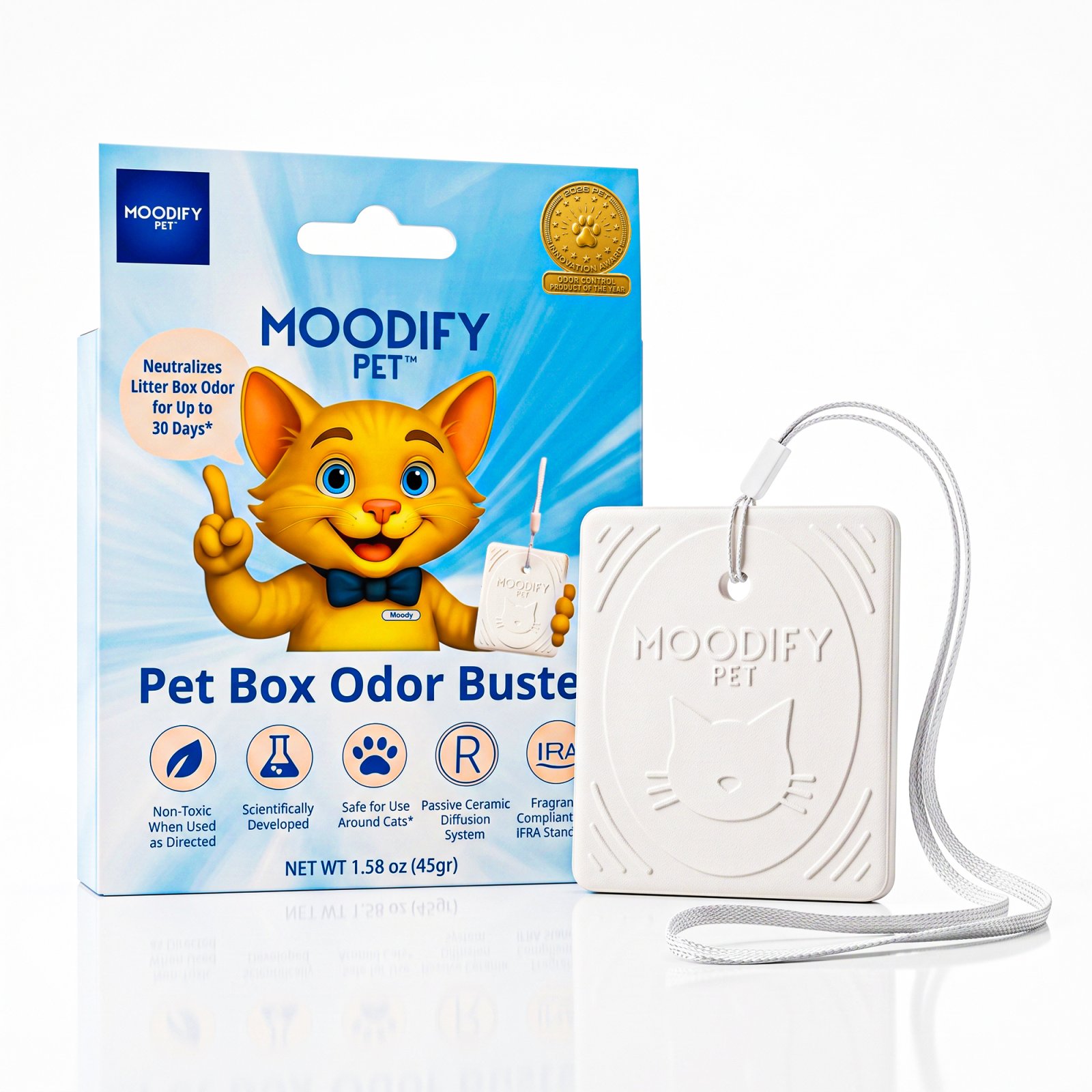
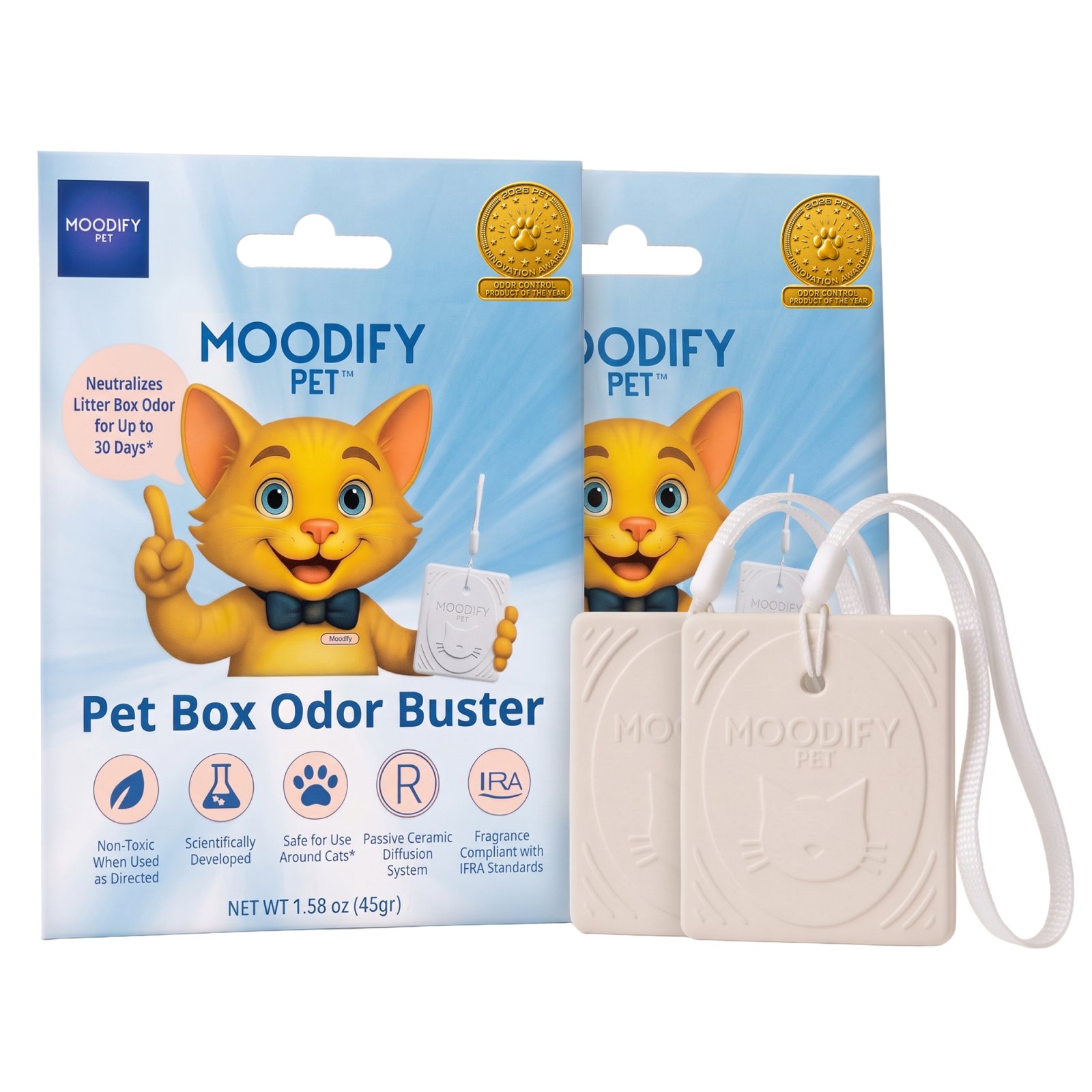
Our premium ceramic passive system hangs 4 to 6 feet above the litter area and works in the surrounding air. It supplements your ventilation plan, not replaces it. The single-box system at $24.99 is a simple way to start. For homes with several boxes, the 3-pack for multi-cat homes at $74.97 gives each zone its own coverage.


HVAC Pet Safety Tips for Ventilation
Your heating and cooling system moves air through the whole house, so it can spread litter odor and dander if it is not set up well. The key is understanding that HVAC systems recirculate air, not exchange it. A standard system pulls return air from rooms, filters some particles, and supplies it back. That means odor molecules and fine litter dust can travel from the litter room to bedrooms unless you manage the path.
Keep these tips in mind:
- Check and replace air filters on the schedule the manufacturer lists. A clogged filter restricts airflow, which can make rooms feel stale and push the system to work harder.
- Keep litter boxes out of rooms with supply or return vents. A return vent near a box will pull odor into the ductwork and redistribute it.
- Close vent covers only in rooms you do not use, since blocking vents can strain the system and create pressure imbalances that pull air from unexpected places.
- Keep cats away from vents that blow hard, which can stir up dust and litter particles.
- Check floor and wall vents for loose covers. A curious cat can paw at a loose cover, and a gap around a vent is an easy place for litter dust to collect.
Many people wonder whether HVAC systems can clean the air fully. Standard filters catch larger particles, but they do not remove all odors. Pair your filter schedule with the steps above. If you notice odor in a room far from the litter box, trace the nearest return vent first; that is often the path.
Cats and ducts: most cats cannot enter a properly sealed duct system, but they can investigate open floor vents, loose covers, and crawl spaces. Keep vent covers secure, and check basement or utility areas where ductwork is exposed. If a cat does get into a vent area, close the room and contact your HVAC provider rather than trying to reach into the ductwork yourself.
MoodifyPet Cat Litter Box Odor Neutralizer — 1 System for 30 Days →
EPA guidance on indoor air quality and ventilation
Choosing an Air Purifier for Cat Litter Odor
An air purifier can help when ventilation alone is not enough, such as on hot or cold days when opening windows is not practical. Look for a unit sized for your room, with a filter suited to the particles and odors you want to address.
Place the purifier near the litter area but not directly next to the box, so it draws in air from the room. Run it on a steady setting rather than only when you smell something. Replace filters on schedule, because a clogged filter stops working well.
For more guidance, see our air purifier comparison for multiple cats.
American Lung Association guidance on portable air cleaners
Booking Your Next Step: Set Up Your Ventilation Plan This Week
Start small. Pick one room, add a window stop, set a daily 15-minute airing routine and track how the room smells after a week. If you have several cats, consider the 3-pack for multi-cat homes at $74.97 so every litter area has coverage. Your ventilation plan will work better with steady scooping, regular litter changes and a safe, cat-proof setup.
Frequently Asked Questions
Can I air out a home with cats by opening windows?
Yes, but only with precautions. Open windows let fresh outdoor air replace stale indoor air and dilute odors, which helps with general indoor air quality. Install a sturdy window screen so cats cannot push through or fall out, and keep windows at a height your cat cannot reach if they are open more than a few inches. Opening windows works best when outdoor air is clean and the weather is mild. On days with heavy pollen, smoke or high outdoor pollution, rely more on filtration and keep windows closed.
Can cat litter box odors travel through HVAC vents?
They can. Air from a room with a litter box can be drawn into return vents and circulated through the ductwork, spreading odor to other rooms. Keep the litter box away from return vents where possible, and make sure the room with the box is not a closed-off space with no air exchange. Regularly changing HVAC filters also reduces the amount of dust and dander circulating through the system, which helps keep the home fresher overall.
Should I use an air purifier or open windows to improve indoor air?
Most homes with cats benefit from both, depending on conditions. Opening windows exchanges indoor air for outdoor air, which dilutes pollutants. An air purifier with a suitable filter captures particles like dust and pet dander without relying on outside air. Use windows when outdoor air is clean and mild, and use a purifier during poor outdoor air days or in rooms where windows are impractical. Neither replaces regular scooping, litter changes and cleaning.
How often should I air out a home with cats?
There is no single required schedule, but many cat owners ventilate daily for 10 to 20 minutes when outdoor conditions are good, and more often around the litter area. Ventilation supplements regular scooping, litter changes and cleaning. If odors return quickly, the issue is usually the litter box routine or airflow in that room rather than the amount of airing out alone.
