 Hollywood Feed

Table of Contents
- Why Cat Litter Odors Spread Throughout Your Home
- Deep Clean to Remove Odor Sources
- How to Keep Litter Box from Smelling Daily
- Manage Litter Box Ammonia Smell and Odor Sources
- Ventilation and Air Quality for Fresh-Smelling Spaces
- Cat Litter Smell in Apartment Living
- Automatic Litter Box Odor Control Solutions
- Neutralize Odors vs. Masking Smells
- Combining Solutions for Maximum Freshness
- Get Started With MoodifyPet
- Frequently Asked Questions
**
Why Cat Litter Odors Spread Throughout Your Home
Cat litter box odors don't stay in one place. They travel through your home via air currents, settling into fabrics, carpets, and walls.
Multi-cat homes and apartments intensify the problem: each box adds to the odor load, and poor ventilation traps smells indoors.
At MoodifyPet, we focus on neutralizing odors in the surrounding air, not masking them. This approach helps address the root cause: odor molecules floating through your home before they settle into fabrics and furnishings.
Deep Clean to Remove Odor Sources
A fresh-smelling house starts with deep cleaning. Litter box smells that linger despite daily scooping often come from hidden problem areas, not the box itself.
Identify hidden odor sources before you clean
Common hidden sources:
- Subfloor and baseboards: Urine can seep through grout or wood, especially around litter box placement areas. If the box has ever leaked or been moved, urine may have soaked into the floor underneath.
- Drains: Bathroom and kitchen drains trap organic matter and bacteria that produce musty, sour smells. These can travel through walls and vents, making it seem like the litter box is the culprit.
- HVAC vents and returns: If the litter box is near an air return, odor molecules get pulled into ductwork and circulated throughout your home. Check vents for dust and debris.
- Damp areas and crawl spaces: Basements and poorly ventilated rooms develop musty smells that mix with litter odors. High humidity traps odor molecules in the air longer.
- Appliances and garbage disposal: Refrigerator drip pans, dishwasher seals, and garbage disposals harbor bacteria. These create background odors that make litter smells seem worse.
- Soft furnishings: Couches, rugs, and curtains absorb urine molecules if a cat has ever had an accident. Even after cleaning, the smell can persist in fibers.
How to troubleshoot:
- Scoop the litter box completely and leave it empty for 24 hours. If the smell persists, the source is elsewhere.
- Walk through each room and note where the smell is strongest.
- Check under and around the litter box for wet spots or discoloration.
- Smell near drains, vents, and appliances separately to isolate sources.
- If the smell is musty rather than ammonia-like, humidity or mold may be the issue.
Vacuum and mop all floors strategically
What to do:
- Vacuum high-traffic areas around the litter box twice weekly with a HEPA-filter vacuum.
- Use a blacklight flashlight to identify old urine spots on carpet or tile.
- Mop hard floors with a warm water and mild vinegar solution (one part vinegar to three parts water).
- For stubborn spots, sprinkle baking soda, let sit 15 minutes, then vacuum.
- Consider professional steam cleaning for multi-cat homes or severe odors.
Clean soft furnishings and fabrics
Steps to freshen fabrics:
- Wash curtains monthly; soak in vinegar solution (one part vinegar to four parts water) for 30 minutes if they smell strongly.
- Vacuum upholstered furniture weekly. For couches near the litter box, sprinkle baking soda, let sit 15 minutes, then vacuum.
- Wash throw blankets and pillows every two weeks.
- Remove area rugs from rooms near the litter box; they trap odors for months.
- For accidents on furniture, use an enzymatic cleaner designed for pet urine.
Dust surfaces and improve air circulation
Quick cleaning routine:
- Dust shelves, baseboards, and furniture weekly to remove odor-carrying particles.
- Wipe down light switches, door handles, and remote controls.
- Clean window sills and tracks where dust and moisture collect.
- Check ceiling fans and light fixtures for dust buildup.
Address the root cause, not just the symptom
If odors persist after thorough cleaning, the problem is likely airborne odor molecules. Air-based odor control neutralizes these molecules before they settle into fabrics and walls. A combination of thorough cleaning and passive air-based odor neutralization addresses both the source and the air.
How to Keep Litter Box from Smelling Daily
Daily litter box maintenance is non-negotiable. Odor-control products supplement but don't replace regular scooping and cleaning. Consistent routines keep smells under control better than sporadic cleaning.
Daily maintenance routine
Morning and evening (twice daily):
- Scoop all clumped litter and visible waste. The longer waste sits, the more ammonia builds up.
- Dispose of waste in a sealed bag or container.
- Use a litter scoop with small holes for better drainage.
- Check the box for spilled litter and sweep it up.
- Ensure the litter box is in a well-ventilated area. If in a closed room, crack a window or turn on a fan for 10 minutes after scooping.
Why twice daily matters: Twice-daily scooping cuts odor at the source and reduces ammonia concentration compared to once-daily scooping.
Weekly maintenance routine
Once per week (same day each week):
- Remove all old litter completely.
- Clean the box bottom with hot water and mild dish soap.
- Rinse thoroughly and allow to dry completely before adding fresh litter.
- Add fresh litter to 2-3 inches depth.
- For multi-cat homes, change litter every 4-5 days instead of weekly.
Monthly deep-clean routine
Once per month (in addition to weekly changes):
MoodifyPet Cat Litter Box Odor Neutralizer — 1 System for 30 Days →
- Empty all litter and scrub the box interior with hot water and mild dish soap.
- For stubborn odors, use a one-to-one vinegar and water solution.
- Rinse thoroughly and allow to air dry completely.
- Inspect the box for cracks or damage. If damaged, replace it.
- For automatic litter boxes, follow the manufacturer's cleaning schedule.
Maintenance schedule at a glance
| Frequency | Task | Why It Matters |
|---|---|---|
| Twice daily | Scoop clumped litter | Removes waste before ammonia builds up |
| Daily | Check ventilation | Prevents odor concentration |
| Weekly | Change all litter | Fresh litter absorbs odors better |
| Weekly | Clean box bottom | Removes residue and staining |
| Monthly | Deep scrub box | Eliminates odor-causing buildup |
| Monthly | Inspect for damage | Prevents urine seepage |
Adjust your schedule for multi-cat homes
Multiple cats produce more waste and ammonia. Standard schedules don't work for multi-cat households.
For 2 cats:
- Scoop three times daily if possible, or twice daily minimum.
- Change litter every 4-5 days.
- Deep clean every 2-3 weeks.
- Use two separate litter boxes (one per cat plus one extra).
For 3+ cats:
- Scoop three times daily or use an automatic litter box.
- Change litter every 3-4 days.
- Use multiple litter boxes in different locations.
Consistency beats perfection
The most effective odor-control strategy is a consistent routine you can maintain. Twice-daily scooping and weekly litter changes are the minimum for a fresh-smelling home.
Manage Litter Box Ammonia Smell and Odor Sources
Ammonia is the primary culprit in litter box odors. It comes from cat urine breaking down over time and concentrates when waste isn't removed promptly or ventilation is poor.
Ways to reduce ammonia:
- Ensure proper ventilation with fans or open windows
- Use clumping litter with ammonia-absorbing ingredients
- Place the litter box in a well-ventilated room or near a window
- Use an odor-neutralizing system that works in the surrounding air
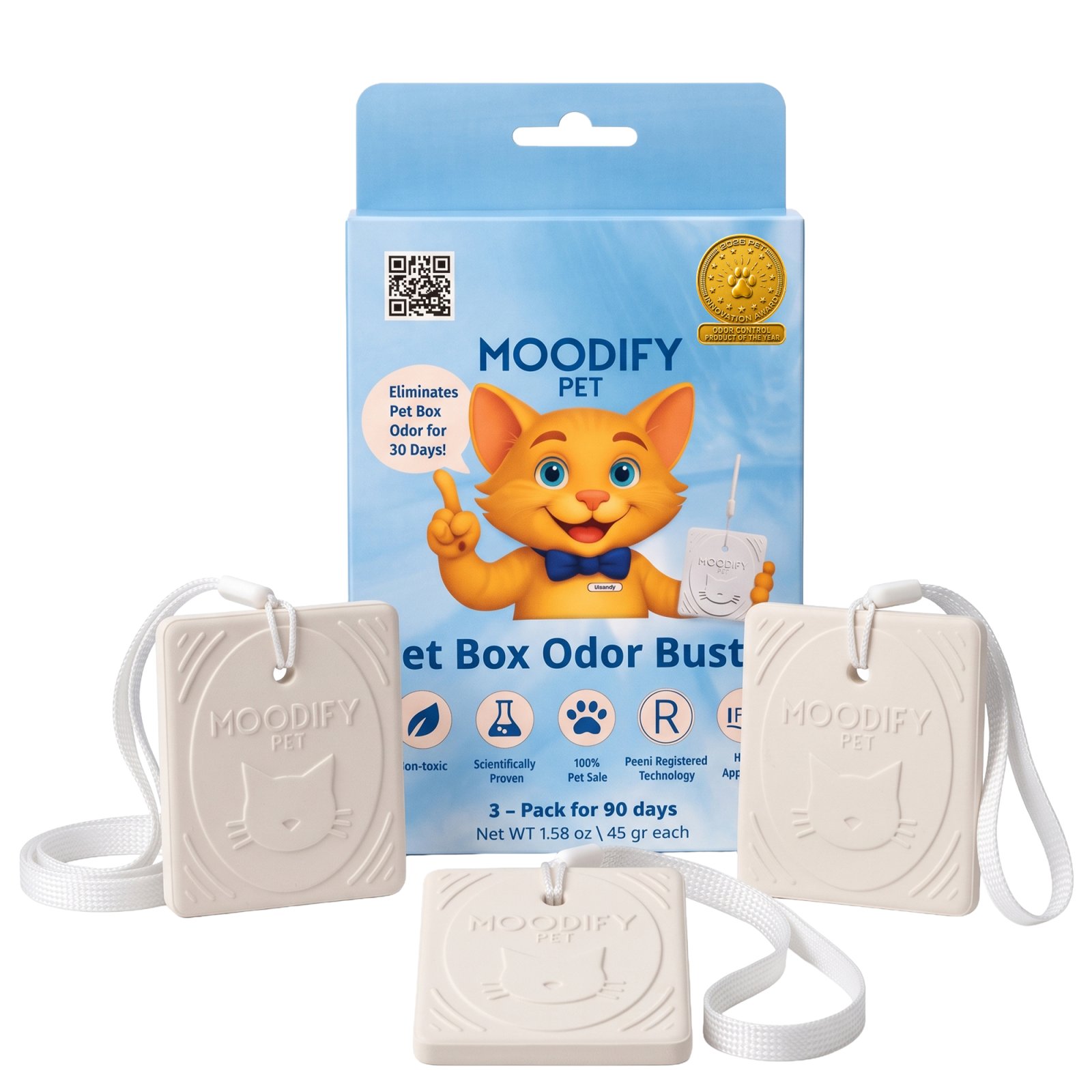
MoodifyPet helps neutralize odors in the air around the litter box, helping reduce ammonia perception throughout your home. It works passively without sprays or electricity, just hang it 4-6 feet above the litter area.
Ventilation and Air Quality for Fresh-Smelling Spaces
Ventilation prevents odor concentration and removes stale smells naturally.
Ventilation strategies:
- Open windows daily for 10-15 minutes
- Run bathroom fans when litter boxes are in bathrooms
- Use portable fans to direct air away from living spaces
- Keep doors open between rooms to allow air circulation
High humidity makes odors more noticeable. A dehumidifier in damp rooms helps, especially in basements.
Cat Litter Smell in Apartment Living
Apartments present unique challenges: limited ventilation, shared walls, and smaller spaces concentrate odors faster.
Apartment-specific solutions:
- Place the litter box in the most ventilated room (usually near a window)
- Use a litter box enclosure or cabinet to contain odors
- Install a small window fan to pull odors outside
- Keep bedroom doors closed to prevent odor spread
- Use air-purifying plants like spider plants or peace lilies (non-toxic to cats)
Apartment dwellers should prioritize daily cleaning and frequent litter changes. Near a bathroom exhaust fan or window with a fan is ideal.
Automatic Litter Box Odor Control Solutions
Automatic litter boxes reduce odor by removing waste frequently, but they still require maintenance and don't eliminate the need for odor control in the surrounding air.
Benefits: Removes waste within minutes of use, reduces ammonia buildup, convenient for busy owners.
MoodifyPet Cat Litter Box Odor Neutralizer — 1 System for 30 Days →
Limitations: Still requires weekly cleaning and litter changes, can be loud, occasional malfunctions, more expensive than traditional boxes.
Automatic boxes complement but don't replace air-based odor control.
Neutralize Odors vs. Masking Smells
Not all odor solutions are equal. Understanding the difference between neutralizing and masking is crucial.
Masking covers up bad smells with stronger scents. Air fresheners, sprays, and scented candles mask odors temporarily; once the fragrance fades, the litter smell returns.
Neutralizing eliminates odor molecules at a chemical level. True odor neutralizers change the odor compound so it no longer smells bad.
Comparison of approaches:
| Approach | How It Works | Duration | Best For |
|---|---|---|---|
| Air freshener spray | Masks with fragrance | 1-2 hours | Quick fixes |
| Scented candles | Masks with fragrance | 2-4 hours | Ambiance |
| Baking soda | Absorbs odors | 1-2 weeks | Carpets and boxes |
| Carbon filters | Absorbs odors | 2-4 weeks | Enclosed spaces |
| Odor neutralizer | Neutralizes molecules | Up to 30 days | Surrounding air |
MoodifyPet uses catalyst technology to help neutralize odor molecules in the air, not mask them.
Combining Solutions for Maximum Freshness
The best approach combines daily scooping, weekly deep cleaning, proper ventilation, and air-based odor neutralization.
Your complete freshness plan:
- Daily: Scoop twice, ensure ventilation
- Weekly: Change litter, deep clean box, vacuum and mop
- Monthly: Wash fabrics, scrub box thoroughly, dust surfaces
- Ongoing: Use an odor-neutralizing system in the air
Get Started With MoodifyPet
If you've been struggling with persistent litter box odors despite your cleaning efforts, the problem may be airborne. MoodifyPet helps neutralize odors in the surrounding air passively, no sprays, powders, or daily applications needed. Just hang it 4-6 feet above your litter area, and it works for up to 30 days. For multi-cat homes, the 3-pack covers multiple boxes or extends single-box coverage to 90 days. Shop MoodifyPet now and experience how to keep house smelling fresh with cats the right way.


Frequently Asked Questions
How can I keep my house smelling fresh with cats without using strong air fresheners?
Combine regular scooping, deep cleaning, and ventilation with an odor neutralizer. Air fresheners mask smells temporarily, but neutralizers like MoodifyPet help work in the surrounding air to address odors at the source. Open windows daily, vacuum and mop regularly, and wash soft furnishings monthly. For passive odor control without sprays or plug-ins, a ceramic odor neutralizer designed for litter boxes can help maintain freshness across your home without artificial fragrance buildup.
Do air fresheners actually eliminate odors or just cover them up?
Most air fresheners mask odors with stronger scents rather than eliminating them. They work temporarily but don't address the source of the smell. True odor neutralizers use different chemistry to break down odor molecules instead of covering them. The difference matters for your home's actual air quality. Neutralizers work best when combined with cleaning and ventilation, not as a replacement for them. Regular scooping and litter changes remain essential regardless of which odor-control method you choose.
What's the best way to control odor around an automatic litter box?
Automatic litter boxes reduce odor by removing waste frequently, but they still need proper placement and maintenance. Position the box in a well-ventilated area away from living spaces, empty the waste drawer daily, and clean the mechanism weekly. Use an odor neutralizer designed for litter boxes to handle airborne smells. Automatic boxes work best in homes with good air circulation. Combine regular maintenance with passive odor control to keep the surrounding air fresh without relying on sprays or plug-ins.
How often should I clean a litter box to keep odors down?
Scoop the litter box twice daily to remove clumps and urine. Change the entire litter at least once weekly, more often in multi-cat households. Wash the box itself with mild soap and water every two weeks to remove residue and bacteria that trap odors. Daily scooping is the single most effective step you can take. Combined with weekly litter changes and good ventilation, frequent scooping prevents ammonia buildup that causes persistent household smells.