 Hollywood Feed

Table of Contents
- Why Cat Litter Odor Happens and How to Eliminate It
- Step 1: Scoop Daily and Replace Litter Regularly
- Step 2: Choose the Right Odor-Controlling Litter
- Step 3: Add Baking Soda or Activated Charcoal
- Step 4: Wash and Disinfect Your Litter Box
- Litter Box Smells After Cleaning: Troubleshooting Persistent Odor
- Step 5: Improve Ventilation and Litter Box Placement
- Step 6: Use Air Purifiers or Passive Odor Neutralizers
- Combining Methods for Best Results
- Frequently Asked Questions
Last Updated: October 12, 2026
Why Cat Litter Odor Happens and How to Eliminate It
Cat litter odor is one of the most common complaints from cat owners.
The good news: you can eliminate cat litter odor with the right approach. Most solutions remove or neutralize odors at the source, and the best strategy combines several methods.
Here's what you need to know: eliminate cat litter odor by combining regular scooping, the right litter type, and either ventilation or odor-neutralizing products.
Step 1: Scoop Daily and Replace Litter Regularly
Scooping is the foundation of odor control: removing soiled litter right away stops odor molecules from building up. Scoop at least once daily, twice in multi-cat homes, the longer waste sits, the more ammonia forms. Replace all litter every 7-10 days, since even the best litter loses odor-absorbing power over time. And remember the box itself holds odors: urine residue clings to the walls, which is why washing and disinfecting matters.
Step 2: Choose the Right Odor-Controlling Litter
Litter is the first line of defense, but "odor control" on a label means little. What matters is how a litter handles moisture, how fast it clumps, how much dust it releases, and whether it contains an odor-absorbing material rather than a perfume.
Match the litter material to your situation
| Litter type | Odor control strength | Dust | Tracking | Best for |
|---|---|---|---|---|
| Sodium bentonite clumping clay | Strong, forms tight, fast clumps that lock urine away from air | Moderate to high | High | Most single-cat homes; the default choice |
| Plant-based clumping (corn, wheat, walnut, tofu) | Moderate to strong, clumps well, lighter weight | Low to moderate | Low to moderate | Owners who want less dust or lighter boxes |
| Non-clumping clay | Weak, absorbs moisture but leaves it in the box | Low | Low | Kittens and cats that eat litter; short-term use |
| Silica gel crystals | Moderate, dries waste and controls moisture, but urine pools at the bottom | Very low | Low to moderate | Low-humidity homes; owners who dislike dust |
| Pine pellets | Moderate, sawdust breaks down when wet | Low | Moderate | Budget-focused owners willing to scoop more often |
Clumping litter wins on odor because it removes urine from the box instead of letting ammonia evaporate into the room. Non-clumping and crystal litters hold moisture in place, so they need more frequent stirring and changing.
Look for an absorber, not a fragrance
Scan the ingredient panel for activated charcoal, zeolite, or baking soda. These trap odor molecules rather than covering them up. A litter that lists "fragrance" near the top is masking odor, once that scent fades, the ammonia smell returns stronger.
Heavily scented litters are also a common trigger for sneezing and upper-respiratory irritation in cats. If your cat sneezes after a litter change, remove the fragrance first.
Match the litter to your box setup
- Automatic litter boxes: use a fine-grain clumping litter the manufacturer approves. Pellet and crystal litters can jam the rake mechanism or slip through the sifting screen.
- Multi-cat homes: choose the fastest-clumping litter you can find and scoop twice daily. Speed matters more than scent when several cats share a box.
- Kittens under about four months: skip clumping litter until your vet clears it. Young cats sometimes ingest litter, and clumps can cause digestive blockages.
Switch litters without triggering a protest
Cats are creatures of habit, and a sudden litter change is a common reason a cat stops using the box. Transition over 7-10 days: 75/25 old-to-new for days 1-3, 50/50 for days 4-6, 25/75 for days 7-9, then a full switch on day 10. If your cat avoids the box at any stage, hold at the previous ratio a few more days.
Even the best litter has limits. Once urine sits for hours, ammonia forms regardless of what the litter contains, which is why litter choice works best alongside daily scooping and an air-based odor-control method.
Step 3: Add Baking Soda or Activated Charcoal
Baking soda is one of the cheapest and most effective odor absorbers. Sprinkle a thin layer of plain baking soda (not baking powder) on fresh litter, a light dusting is enough, since too much can irritate your cat's paws or respiratory system. Activated charcoal works similarly but is more powerful and lasts longer; add charcoal pellets to your litter or place a container near the box.
Step 4: Wash and Disinfect Your Litter Box
Bacteria and urine residue build up inside the litter box over time. Even with daily scooping, odor clings to plastic or ceramic.
For stubborn odors, use a pet-safe cleaner or a diluted bleach solution (1 part bleach to 10 parts water).
Enzyme-based cleaners break down urine proteins at the molecular level. They're gentler than bleach and very effective for persistent odors.
Litter Box Smells After Cleaning: Troubleshooting Persistent Odor
If your litter box still smells after a full scrub, the odor is coming from somewhere your cleaning routine isn't reaching. Work through the causes below in order.
MoodifyPet Cat Litter Box Odor Neutralizer — 1 System for 30 Days →
Step 1: Rule out a health issue first
Sudden, intense odor is a medical signal, not a cleaning problem. Contact your veterinarian if you notice:
- Ammonia smell that appeared within a day or two and is far stronger than usual, concentrated urine odor can point to a urinary tract infection, crystals, or dehydration.
- Urine that looks cloudy, pink, or bloody, or that your cat strains to pass.
- Stool that is unusually foul, greasy, or pale. A sharp change in stool odor can reflect a digestive issue or a parasite.
Routine litter odor builds gradually and fades after scooping. Odor tied to a health problem spikes quickly and stays strong even in a freshly cleaned box. When in doubt, call your vet.
Step 2: Find where the odor is actually coming from
Use this quick diagnostic before you buy anything new:
- Sniff the box itself, not the litter. Scrub the empty box, let it dry, then smell the plastic. If the box still smells, the plastic has absorbed urine and no amount of litter will fix it.
- Check the seams and corners. Urine pools in the corners and along the rim where the box meets the hood. Run a finger along the inside edge, if it feels tacky, that's residue.
- Look under and behind the box. Splash and tracking leave urine on the floor and baseboard, which keeps the room smelling even after the box is clean.
- Check the scoop and the mat. Both hold odor. Wash the scoop with the box and replace a mat that has absorbed urine.
- Sniff the air away from the box. If the box smells clean but the room doesn't, the odor is airborne and you need an air-based solution rather than more scrubbing.
Step 3: Replace what can't be cleaned
Plastic litter boxes are porous. Once urine soaks in, the odor returns within days no matter how thoroughly you scrub. If a box still smells after a full wash and a day of air-drying, replace it, most plastic boxes need replacing every 12-18 months in a single-cat home, and more often in a multi-cat home. Ceramic and stainless-steel boxes are non-porous and last far longer, so consider stainless if you replace a plastic box.
Step 4: Clean safely, what to use and what to avoid
Cats are far more sensitive to cleaning chemicals than humans are. They walk on the box floor, then groom their paws, so anything left behind gets ingested.
Safe options: hot water and a mild, unscented dish soap; an enzyme-based pet cleaner, which breaks down the uric acid crystals that cause lingering urine odor; or a diluted bleach solution (1 part bleach to 10 parts water) for disinfection, followed by a thorough rinse and full air-dry.
Avoid entirely:
- Pine, citrus, and eucalyptus oils. These essential oils are toxic to cats even in small amounts, and "natural" cleaners often contain them.
- Ammonia-based cleaners. Ammonia smells like urine to a cat and can encourage marking.
- Heavily perfumed sprays and air fresheners near the box. Strong fragrance irritates feline airways and does nothing to remove the odor source.
Always rinse until you can't smell any cleaner, then let the box dry completely before adding litter.
Step 5: Measure whether your fix actually worked
Most people layer on products without confirming which one helped. A simple test tells you:
- Pick a baseline day. After a full clean, note how strong the odor is on a 1-5 scale at three times: right after scooping, six hours later, and the next morning.
- Change one thing. Add a new litter, a charcoal filter, or an air-based neutralizer, not all three at once.
- Repeat the same three readings for three days.
- Compare. If the six-hour and next-morning scores drop, the change is working. If they don't, remove it and try the next method.
This one-variable approach saves money and stops you from stacking masking products on a problem you haven't identified.
Cornell Feline Health Center, feline lower urinary tract disease
ASPCA Animal Poison Control, essential oils and cats
Once the box itself is clean and the litter is fresh, the remaining odor is airborne. That's where a passive odor neutralizer like MoodifyPet fits, it hangs 4-6 feet above the litter area and works in the surrounding air, not in the litter, so it supplements your cleaning routine instead of replacing it.

Step 5: Improve Ventilation and Litter Box Placement
Air movement stops odor from concentrating in one spot. In a closed room with no ventilation, odors build up fast. Move the box to a room with a window or air vent, open windows daily, and use a small fan near the litter area to push odor-filled air out. Placement matters too: put the box away from living spaces and bedrooms, bathrooms, laundry rooms, and basements work well.
Step 6: Use Air Purifiers or Passive Odor Neutralizers
When scooping, litter choice, and cleaning aren't enough, air-based solutions reduce odor in the surrounding air before it spreads through your home.
MoodifyPet Cat Litter Box Odor Neutralizer — 1 System for 30 Days →
HEPA Air Purifiers and Carbon Filters
HEPA air purifiers pull air through a filter that traps particles and odor molecules. Run one continuously or for several hours daily in the room where the box sits.
Carbon filters are even more effective for odor, activated carbon traps odor molecules better than HEPA alone. Look for purifiers with carbon pre-filters.
Air purifiers take 30-60 minutes to noticeably reduce odor in a room, and they require regular filter changes that add ongoing cost.
Passive Odor Neutralizers: A Set-and-Forget Approach
Passive odor neutralizers don't require electricity or filter changes. They hang above the litter box and neutralize odors in the surrounding air without sprays or powders.
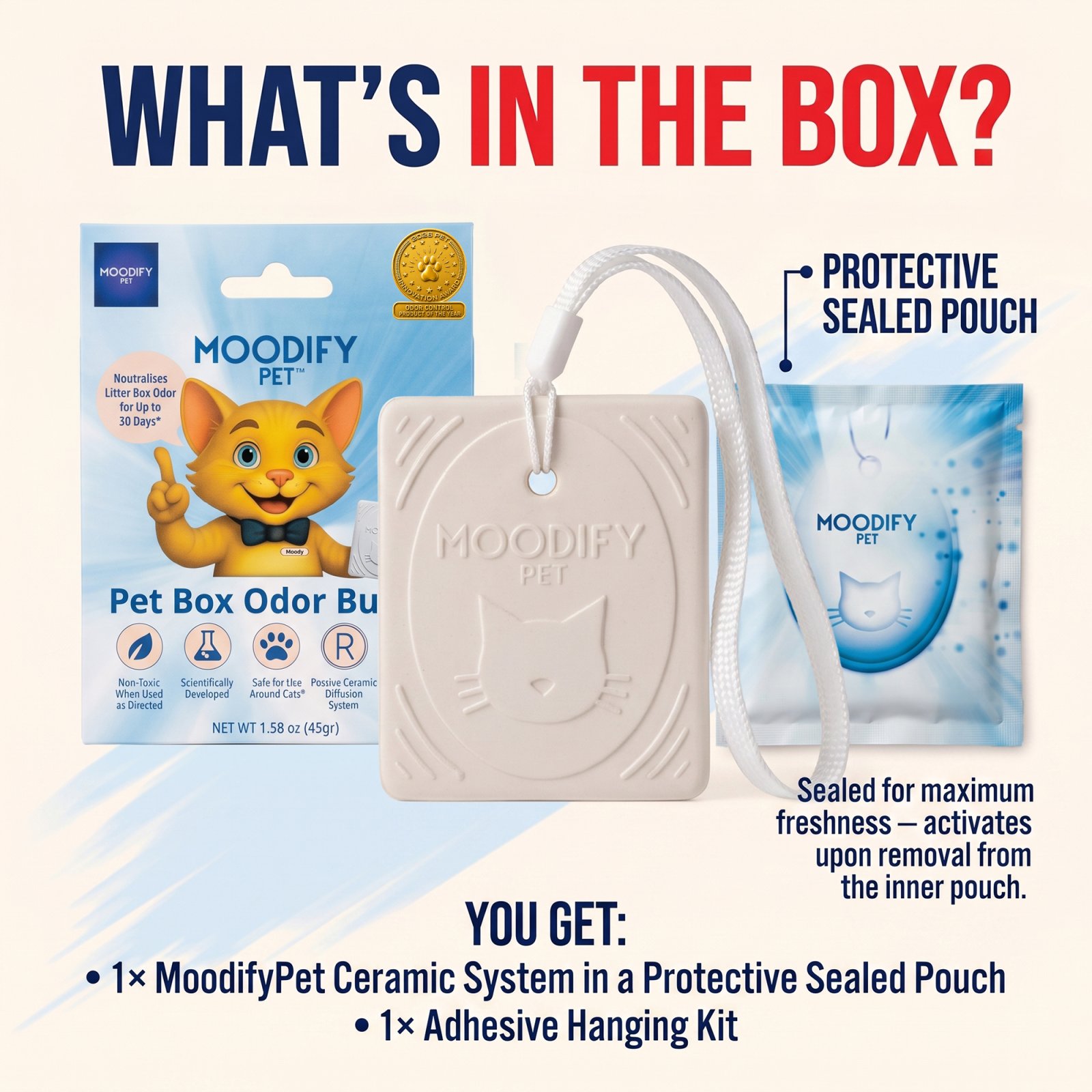
MoodifyPet is a passive odor-neutralizing system that works differently than air fresheners. Instead of masking odor, it helps neutralize odor molecules in the surrounding air. Hang it 4-6 feet above your litter box; it covers up to 500 square feet and lasts up to 30 days.
| Method | Setup Time | Maintenance | Coverage | Best For |
|---|---|---|---|---|
| Baking Soda | 2 minutes | Weekly | Single box | Budget-conscious owners |
| HEPA Air Purifier | 5 minutes | Monthly filter changes | One room | Owners who want active filtration |
| Passive Neutralizer | 30 seconds | Replace every 30 days | Up to 500 sq. ft. | Multi-cat homes, apartments |
| Activated Charcoal | 5 minutes | Monthly replacement | Single box | Owners wanting natural odor control |
Combining Methods for Best Results
One method alone rarely eliminates all odor. The best approach combines multiple strategies.
Start with daily scooping and good litter. Add baking soda or charcoal. Wash your box every 2-4 weeks. Improve ventilation if possible.
If odor persists, add an air purifier or a passive odor neutralizer. Most owners see the best results with daily scooping plus one supplemental odor-control product.
For multi-cat homes, passive odor neutralizers like MoodifyPet handle odor across a larger area without filter changes or electricity, supplementing your cleaning routine without adding daily tasks.

Persistent litter box odor doesn't have to be part of cat ownership. If you need more help, a passive odor neutralizer like MoodifyPet works in the surrounding air to neutralize odors without sprays or electricity. Choose the 1-pack for a single cat or the 3-pack for multi-cat households to keep multiple litter areas fresh for up to 30 days.
Frequently Asked Questions
How do I know if my litter box odor control method is actually working?
The best indicator is whether guests or family members notice the smell when entering the room. Track odor levels over a few days, if the room smells noticeably fresher without constant spraying or masking, your method is working. Keep in mind that your own sense of smell adapts after 24-72 hours around a scent, so what feels less noticeable to you may still be effective. Regular scooping combined with ventilation or a passive neutralizer like MoodifyPet should create a measurably fresher environment within a week.
Can I use multiple odor-control methods together, or will they conflict?
Yes, combining methods is often more effective than relying on one alone. For example, daily scooping plus odor-controlling litter plus baking soda creates layered protection. However, avoid mixing strong chemical sprays with air purifiers running simultaneously, as this can create an overwhelming artificial scent. A practical combination: clumping litter + baking soda + improved ventilation + a passive neutralizer like MoodifyPet works well because each addresses odor from a different angle without competing.
Why does my litter box still smell bad even after I clean it thoroughly?
Persistent odor after cleaning usually points to incomplete disinfection or lingering urine residue in the box itself. Urine soaks into porous plastic and wood, so scrubbing with water alone won't remove it. Use a 1:10 bleach-to-water solution or enzymatic cleaner designed for pet urine, let it sit for 10 minutes, then rinse thoroughly and dry completely. Also check if your litter box liner has small tears, urine can seep underneath. If odor returns within hours of cleaning, the box itself may need replacement.
How often should I replace my litter box to control odor?
Most plastic litter boxes last 1-2 years with proper care, but if odor persists despite thorough cleaning and good litter maintenance, replacement may be necessary. Scratches and worn areas trap bacteria and urine. If you notice discoloration, cracks, or lingering ammonia smell even after deep cleaning with enzymatic cleaners, investing in a new box is worth it. Stainless steel or ceramic boxes resist odor absorption better than plastic and may last longer, though they cost more upfront.