 Hollywood Feed

Table of Contents
- What Is Passive Litter Odor Control?
- How Passive Odor Neutralizers Work vs. Masking Products
- Automatic Litter Box Odor Control: Passive Solutions
- Managing Cat Litter Smell in Apartment Living
- Multi-Cat Litter Box Odor Control: Scaling Your Solution
- Litter Box Deodorizer Without Baking Soda: Alternatives That Work
- Choosing the Right Passive System for Your Home
- Conclusion: Sustainable Odor Control That Fits Your Life
- Frequently Asked Questions
Last Updated: October 19, 2026
What Is Passive Litter Odor Control?
Passive litter odor control neutralizes cat litter smells in the surrounding air without electricity, sprays, powders, or daily maintenance. Once installed, it works continuously, an effortless option for households with persistent litter box odors.
The key distinction: passive systems work in the air around the box, not inside the litter, so odor molecules are neutralized before they spread, unlike masking products that simply cover up smells.
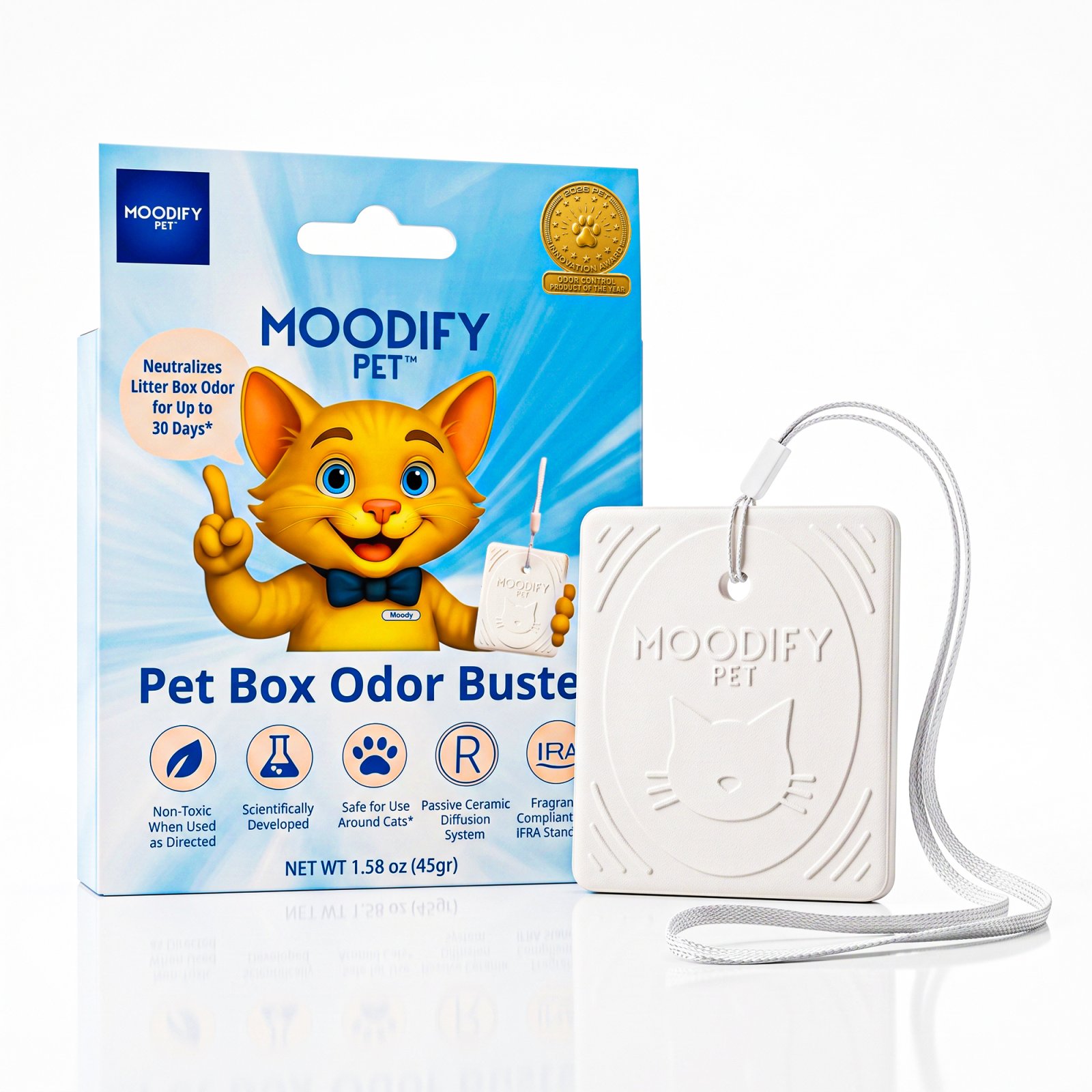
Passive systems typically hang 4-6 feet above the litter area and rely on porous materials to capture and neutralize odor. MoodifyPet, for example, uses fragrance-infused porous ceramic with catalyst technology that targets odor molecules directly, providing up to 30 days of continuous odor control and designed for up to 500 sq. ft. of coverage, depending on conditions.

It works for single-cat homes, multi-cat households, apartments, and automatic litter boxes, and complements regular scooping and cleaning rather than replacing it.
How Passive Odor Neutralizers Work vs. Masking Products
Most litter-box products either neutralize or mask, and the two solve very different problems.
Masking products, scented sprays, plug-in air fresheners, fragrant litter additives, scented candles, and most "litter box air fresheners", layer a stronger fragrance on top of the odor.
Neutralizing products target the odor molecules themselves. Cat litter odor comes primarily from ammonia, produced as bacteria break down urea in urine, plus sulfur-containing compounds from feces. Neutralizers bind or break down these molecules so they no longer register as smell.
The four types of litter-box odor control
It helps to sort products by how they deliver odor control, because "passive" is a specific category.
| Type | Examples | Power source | Works where | Ongoing effort |
|---|---|---|---|---|
| Masking | Scented sprays, plug-ins, scented litter, candles | None or outlet | Air (fragrance only) | Frequent reapplication |
| In-litter additives | Baking soda, activated charcoal, enzymatic powders | None | Inside the litter | Weekly reapplication, messier scooping |
| Active air treatment | Powered air purifiers with carbon or HEPA filters, automatic sprayers | Electricity or batteries | Air | Filter changes, power, noise |
| Passive air neutralizers | Fragrance-infused porous ceramic systems such as MoodifyPet | None | Surrounding air | Replace roughly every 30 days |
Each type has a place. In-litter additives control odor inside the box. Powered air purifiers filter a lot of air but need electricity, take up space, and add fan noise near a box cats may already find stressful.

Passive neutralizers fill the gap those options leave: no electricity, batteries, sprays, or daily action. A fragrance-infused porous ceramic odor-neutralizing system hangs 4-6 feet above the litter area and works on odor in the surrounding air continuously.
Why the fragrance fades (and why that's not a failure)
Many owners notice the initial fragrance from a passive system becomes less noticeable after 24-72 hours. That does not necessarily mean odor control has stopped. Judge a passive system by whether litter odor builds up in the room, not by how strongly it smells on day five.
Automatic Litter Box Odor Control: Passive Solutions
Automatic litter boxes cycle frequently, stirring up litter and releasing odor molecules into the air more often than traditional boxes, creating continuous odor pulses.
Passive odor control works well with automatic boxes because it neutralizes odors as they're released.
MoodifyPet Cat Litter Box Odor Neutralizer — 1 System for 30 Days →
Passive systems also eliminate the need for sprays or powders near the machine.
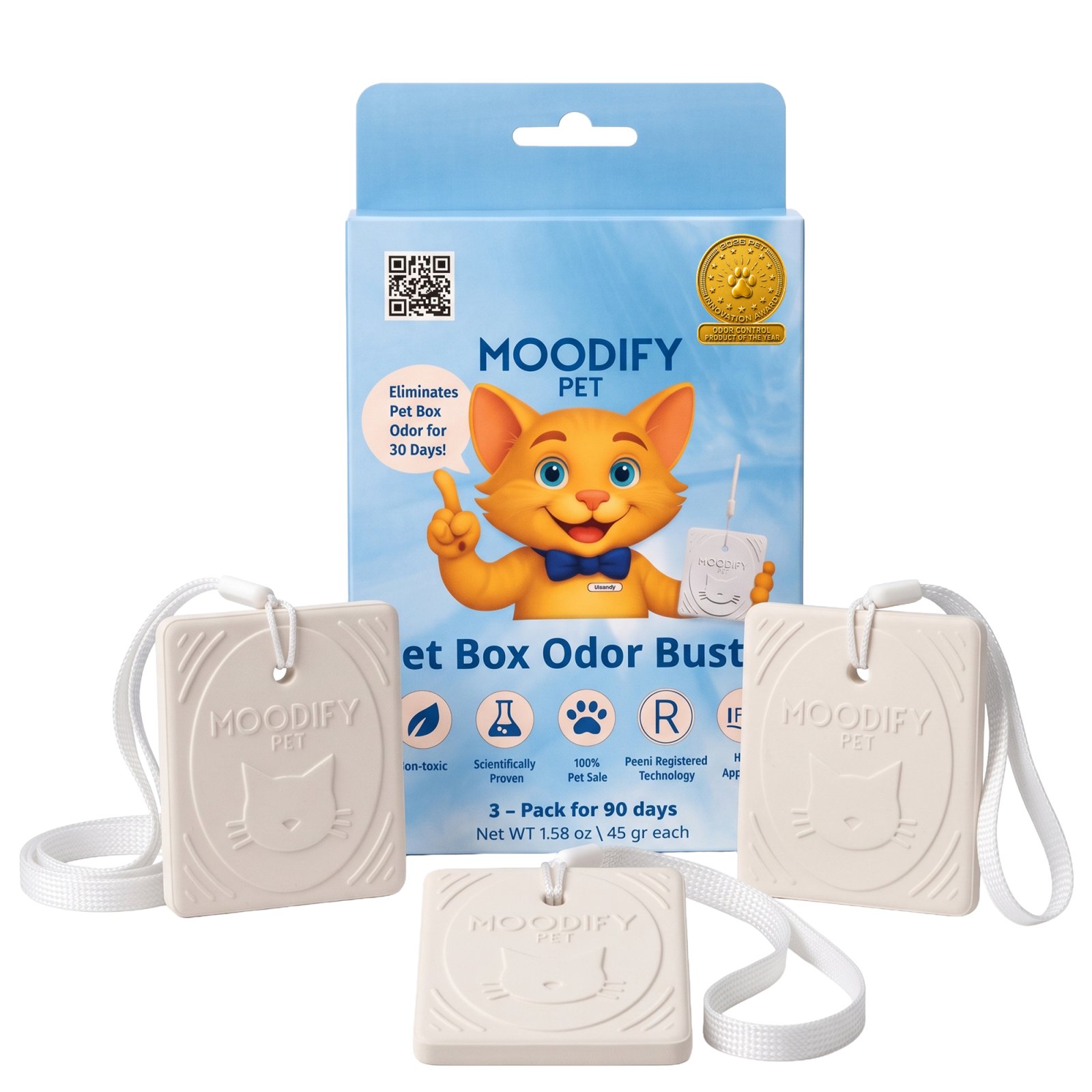
For multi-cat homes with automatic boxes, scaling up is straightforward: one system per box provides 30 days of coverage, so a multi-pack keeps continuous odor control across all units without refilling sprays or recharging batteries.

Managing Cat Litter Smell in Apartment Living
Apartment living amplifies litter box odor. Smaller spaces concentrate smells faster, shared walls can carry odors to neighbors, and ventilation is often limited.
Passive odor control suits apartments because it requires no installation, electricity, or ongoing maintenance, ideal for rentals where landlords restrict modifications.
Passive systems also don't add chemical sprays or powders to small, enclosed spaces, where regular air fresheners can become overwhelming.
Multi-Cat Litter Box Odor Control: Scaling Your Solution
Multi-cat homes face exponentially higher odor challenges. Two cats produce roughly twice the urine and feces, and three cats create three times the ammonia. Standard odor-control methods often struggle in multi-cat households.
Passive odor control scales proportionally: one system per litter box for 30 days.
The advantage in multi-cat homes is consistency. Passive systems work automatically once installed, reducing the mental load of odor management.
Some multi-cat households place one box per cat with separate passive systems; others use shared boxes with multiple systems nearby for concentrated coverage.
Litter Box Deodorizer Without Baking Soda: Alternatives That Work
Many cat owners sprinkle baking soda directly into the box to absorb odors.
Activated charcoal absorbs some odor molecules but, like baking soda, only works inside the litter box and requires regular replacement.
Enzymatic litter additives break down odor-causing compounds chemically. They work primarily inside the litter and require consistent application.
Passive odor neutralizers take a different approach: they work in the air, not in the litter, so they complement any litter type.
| Odor Control Method | How It Works | Coverage | Maintenance |
|---|---|---|---|
| Baking soda | Absorbs odor inside litter | Litter box only | Reapply weekly |
| Activated charcoal | Absorbs some odors inside litter | Litter box only | Replace monthly |
| Enzymatic additives | Breaks down odor compounds in litter | Litter box only | Add to each scoop |
| Passive neutralizers | Neutralizes odor in surrounding air | Up to 500 sq. ft. | Replace every 30 days |
Choosing the Right Passive System for Your Home
Selecting a passive odor-control system comes down to four questions: how many boxes you have, how much air it needs to cover, how long a unit lasts, and whether it's safe around your cats.
MoodifyPet Cat Litter Box Odor Neutralizer — 1 System for 30 Days →
1. Count your boxes, not just your cats
Coverage scales with litter boxes, not cats. As a starting rule:
- One box, one room: one passive unit placed 4-6 feet above the box.
- Two or three boxes in different rooms: one unit per room, since a single unit can't effectively treat air on the other side of a wall.
- Multiple boxes in one open area: one unit can often cover the shared space, especially in a well-ventilated room within the rated coverage area.
2. Match coverage to the room, not the whole house
MoodifyPet is designed for up to 500 sq. ft. of coverage, depending on conditions, roughly a large living room or open-plan area, not a whole multi-story home. A closed, humid laundry room with poor airflow will challenge any passive system, so expect shorter replacement intervals in enclosed spaces.
3. Plan replacement on a calendar, not on your nose
Passive systems don't announce when they're spent, by the time you notice odor, you've already had a few days of reduced performance. Replace on a fixed schedule (the first of the month is an easy anchor). This is where Subscribe & Save earns its keep: replacements arrive before you run out, so there's no gap in air-side support.
4. Placement and cat safety
Placement is where passive systems either work or don't:
- Hang 4-6 feet above the litter area. Odor rises and disperses upward; a unit at nose height for a standing human is roughly right. Avoid placing it where a cat can reach, chew, or knock it into the box.
- Keep it out of direct contact with litter and cats. The system is designed to work in the air, not in the box. No contact means no ingestion risk and no interference with scooping or automatic cycling.
- Don't block ventilation. A unit near a return vent or open window works with airflow, not against it. Avoid tucking it inside a closed cabinet over the box.
- Watch sensitive cats. Some cats are sensitive to strong fragrance. If your cat avoids the litter area after installation, move the unit a few feet farther from the box or to a higher spot. Cats with known respiratory conditions deserve extra caution with any scented product, ask your veterinarian if you're unsure.
- Works with automatic boxes. Hang the unit above the box, not on it. Sprays and powders can damage electronics and sensors; a passive unit avoids that entirely.
5. What passive control does not replace
A passive system supplements, it does not replace, regular scooping, full litter changes, box washing, and basic ventilation. If odor persists despite all of those, the cause is usually litter past due for a full change, a box needing a deep wash with unscented detergent, a covered box trapping odor, or a room with no air exchange.
Conclusion: Sustainable Odor Control That Fits Your Life
Passive litter odor control solves a real problem: persistent cat litter smells that masking products and additives can't fully address.
The approach works across household types, single cats, multi-cat homes, apartments, and automatic litter boxes, and complements your regular scooping and cleaning routine.
MoodifyPet offers a passive odor-control system designed for exactly this purpose.
Ready to stop masking litter-box odors and start neutralizing them? Shop MoodifyPet Cat Litter Box Odor Neutralizer and enjoy a fresher home for 30 days.
Frequently Asked Questions
How does passive litter odor control actually neutralize odors instead of just masking them?
Passive odor neutralizers work by releasing fragrance compounds that chemically interact with odor molecules in the air, neutralizing them at the source rather than covering them up with stronger scents. Unlike air fresheners that layer fragrance on top of bad smells, true odor neutralizers like MoodifyPet use catalyst technology to break down ammonia and urine odor molecules. The key difference: masking products make your nose detect pleasant scent first; neutralizing products eliminate the odor molecules themselves so there's less to smell.
Can a passive odor neutralizer handle multiple cats, or will I need additional products?
Passive odor neutralizers can handle multi-cat households when properly scaled. A single unit typically covers one litter box for up to 30 days, so a two-cat home can use two units, or one unit replaced twice monthly. For three or more cats, multi-packs like MoodifyPet's 3-pack or 6-pack provide continuous coverage. These systems work best alongside regular scooping and litter changes, they supplement your routine, not replace it.
How long do passive litter box deodorizers actually last before I need to replace them?
Most passive odor control systems last up to 30 days per unit. You may notice the fragrance becomes less noticeable after 24-72 hours, but this doesn't mean odor control has stopped, the system continues neutralizing odors even when you're less aware of the scent. For continuous freshness, replace your unit every month. Subscribe & Save options make this automatic, so you never run out. The actual lifespan depends on room size, ventilation, and number of cats, but 30 days is the standard replacement interval for optimal performance.
Is passive odor control safe for cats and people to use every day?
Yes, passive odor neutralizers designed for pet homes are safe when used as directed. MoodifyPet systems are non-toxic, IFRA-compliant, and formulated specifically for use around cats. The device hangs 4-6 feet above the litter box without contacting cats or litter, so there's no direct exposure. Always check product certifications and keep the device out of reach if you have curious cats. If anyone in your home has fragrance sensitivities, test the product in a small space first, or choose fragrance-free passive options when available.